All news
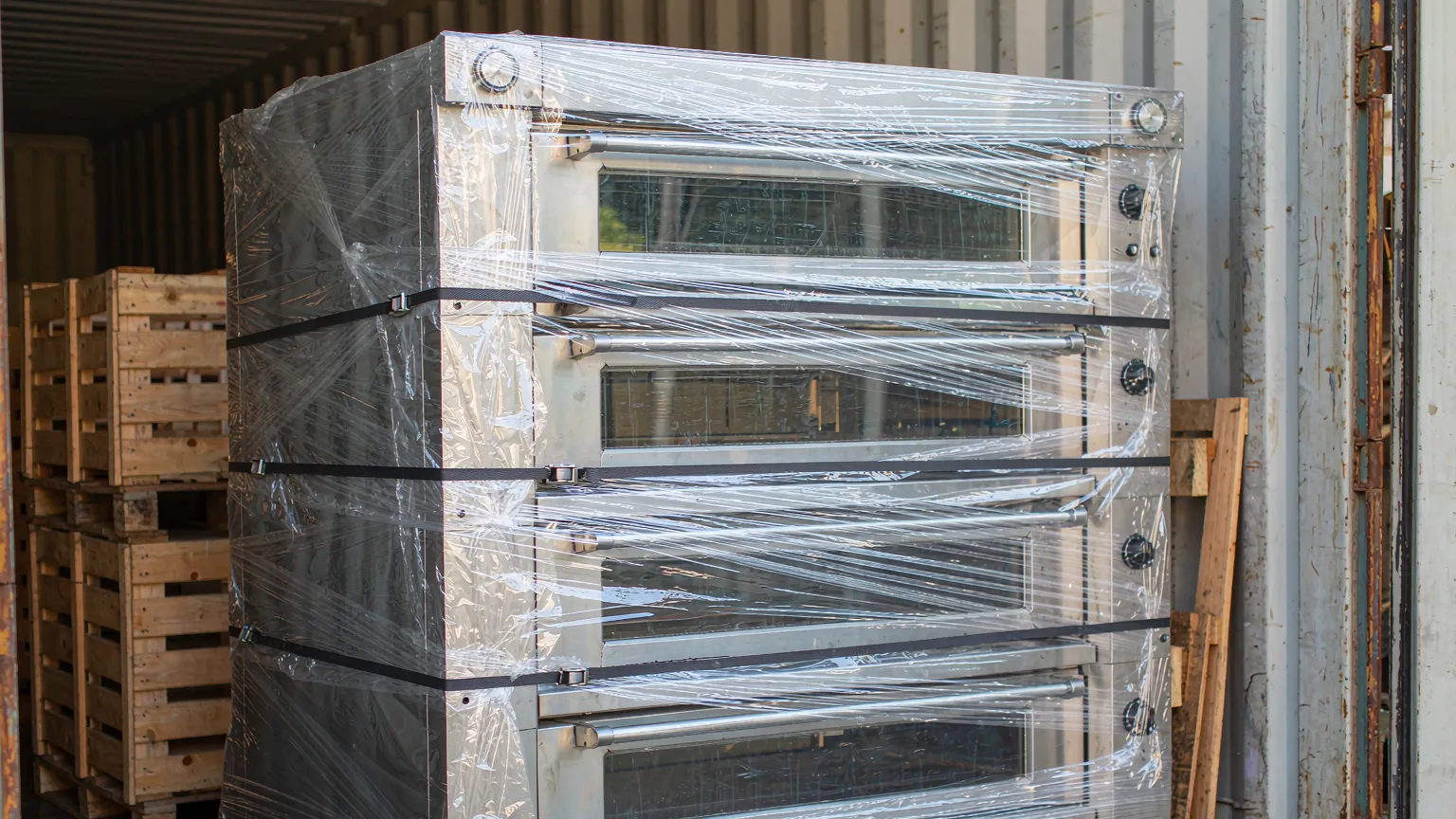
How Bakery Equipment Is Packed and Shipped: A Guide for Export Buyers
2026/11/24
Export Bakery Equipment Packing and Shipping Buyer's Guide: Crating and Moisture Control, Loose Parts, Container Cube Math, LCL vs FCL, Voltage/Gas Checks, Documents, Site Access, Arrival Inspection
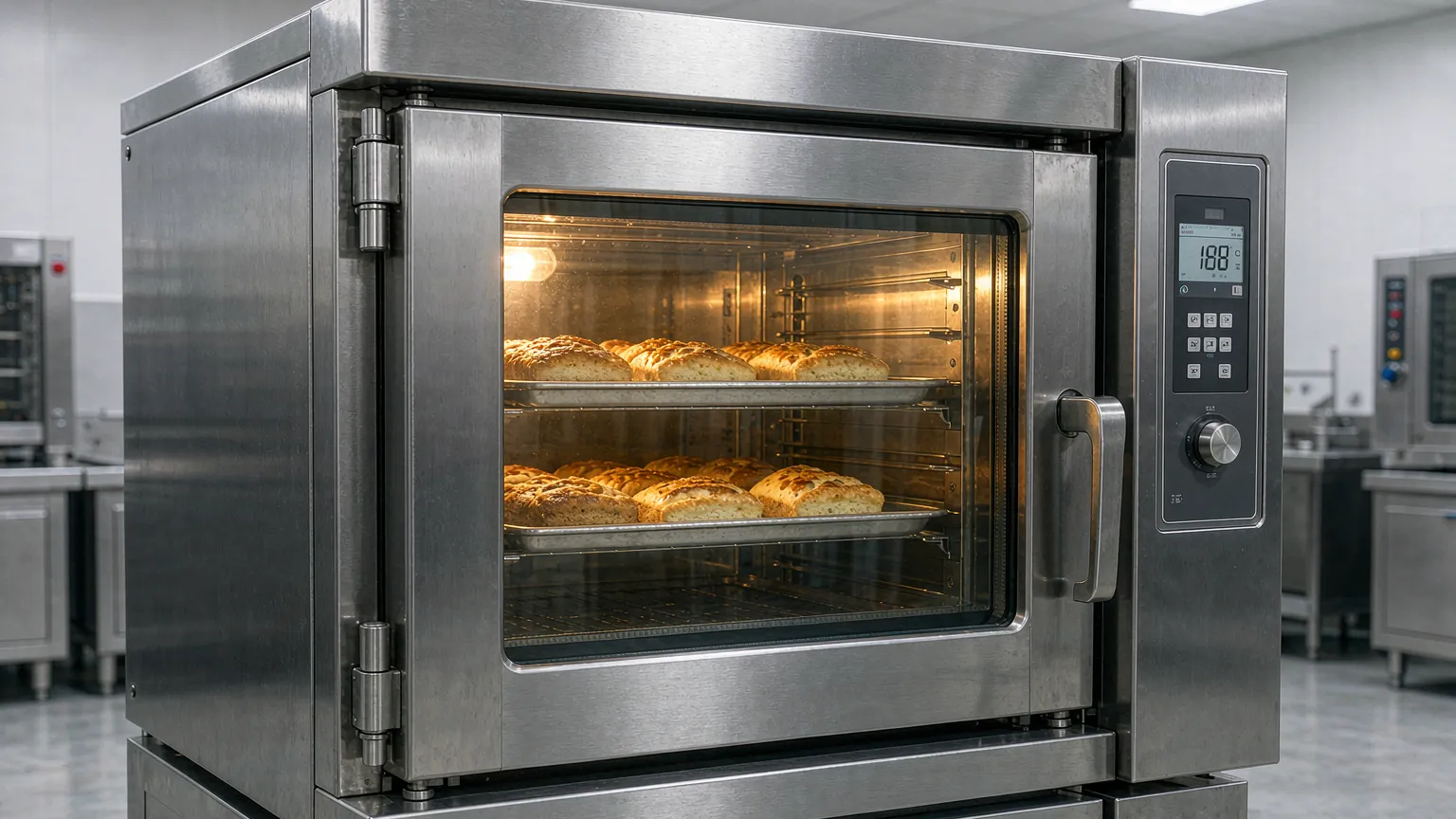
Energy Efficiency in Commercial Bakery Ovens: Where the Heat Actually Goes
2026/11/24
Commercial Baking Energy
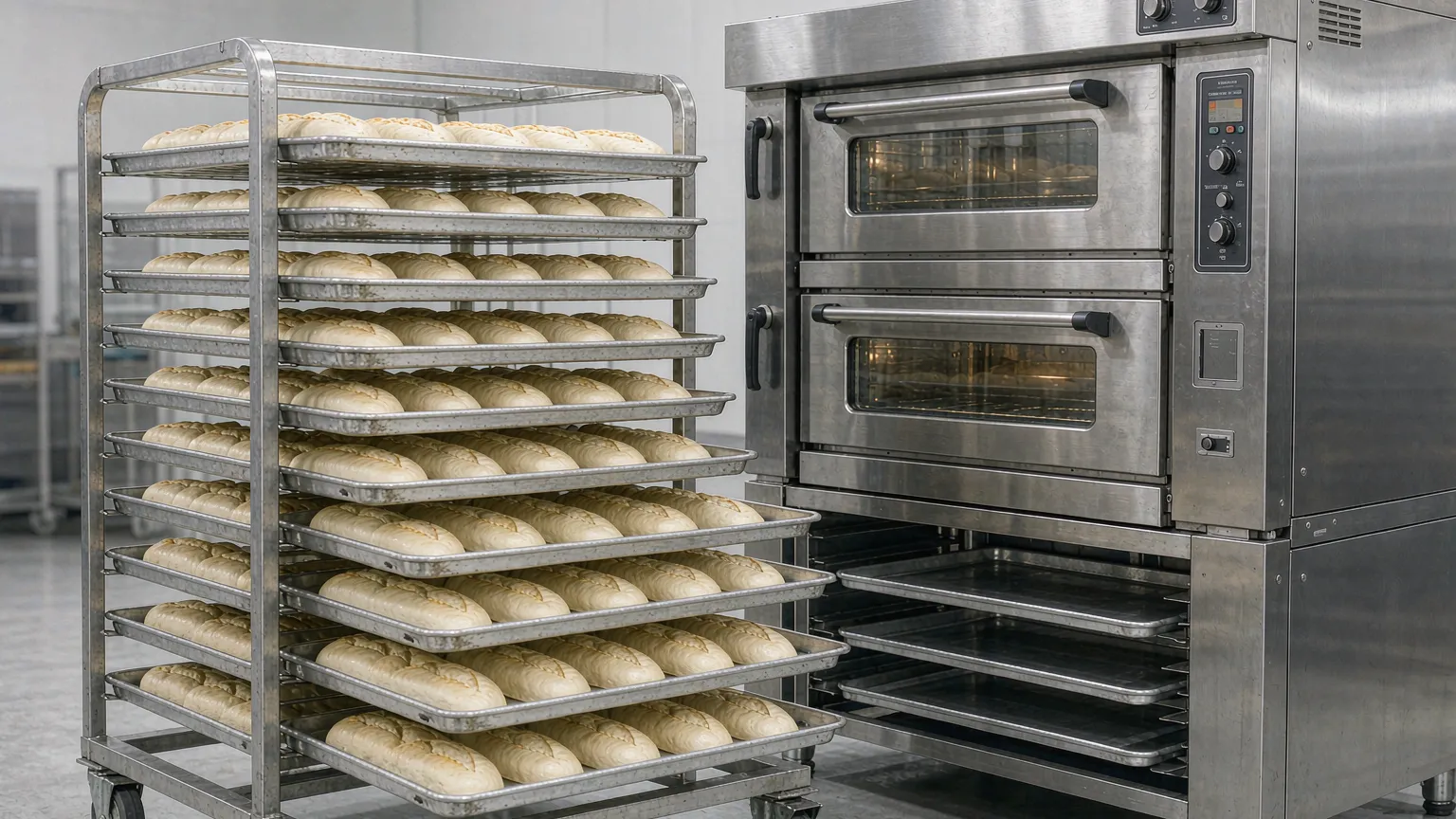
Bakery Tray and Trolley Standards: The Dimensions That Hold a Line Together
2026/11/24
Why tray and trolley dimensions decide bakery layout: the four common tray formats, trolley pitch and height checks, measuring an existing oven, base rack and rack oven standards, and the specification sheet that prevents mismatches.
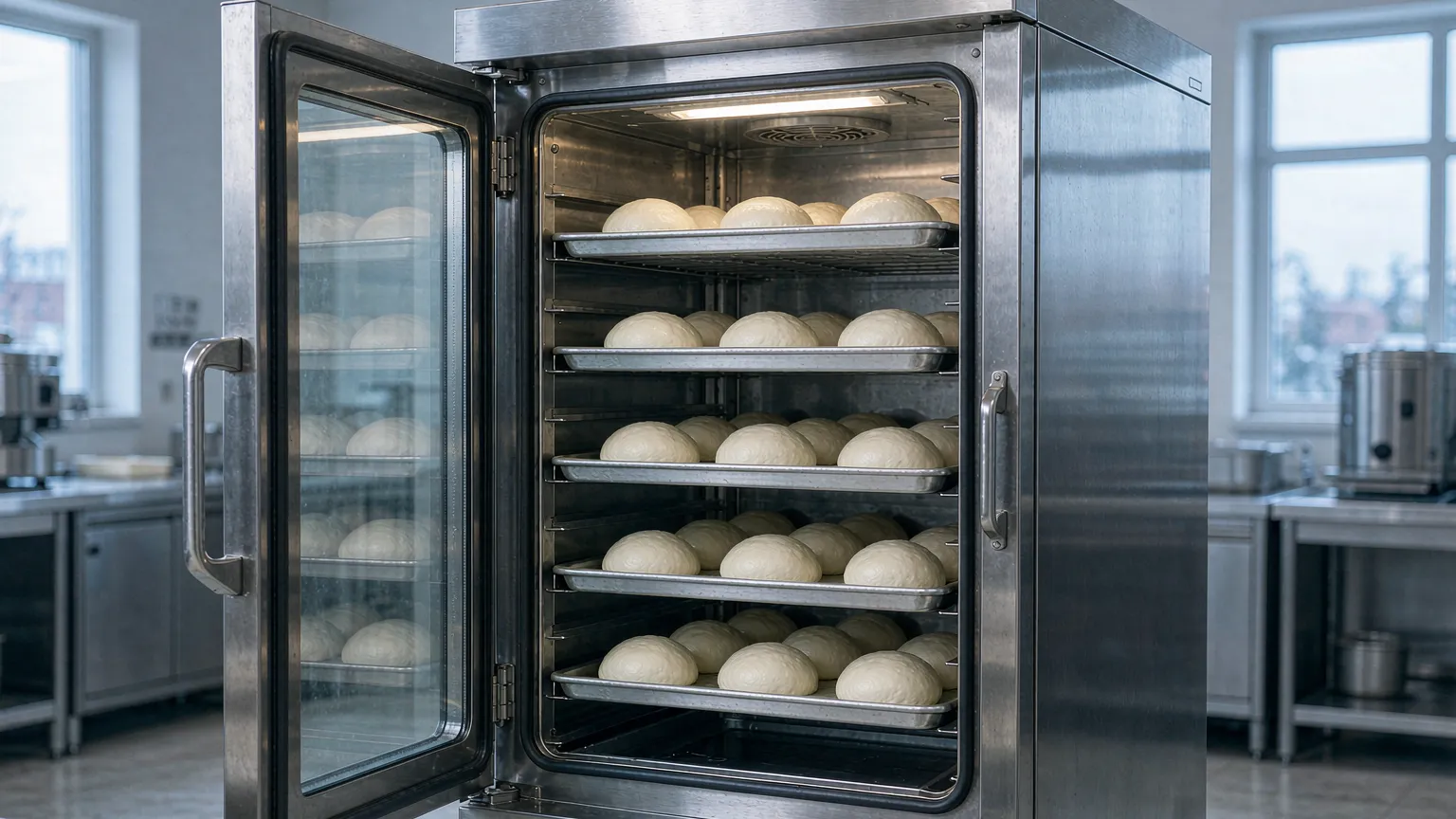
Retarded Fermentation: Overnight Dough Schedules for Bakeries
2026/11/20
What retarded fermentation actually does in the bakery, bulk versus shaped retarding, a practical overnight schedule, formulation tweaks for the cold, what a retarder-proofer must do, and equipment-driven failures.
Dough Temperature Control in Commercial Baking
2026/11/20
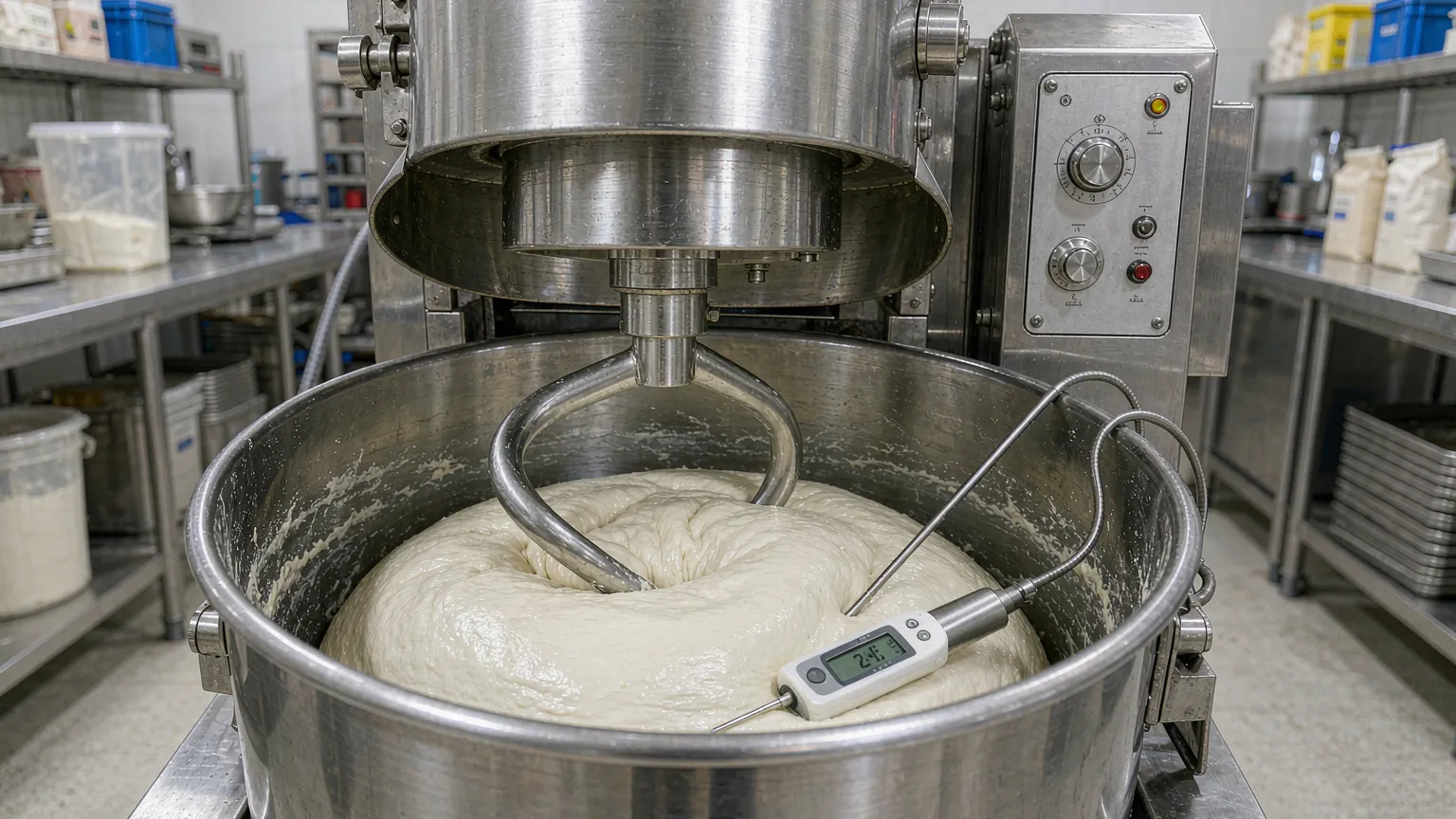
In any commercially consistent bread operation, final dough temperature (FDT) is the single most important number on the batch sheet. It is not a flavor variable, or a texture nicety. It is the operating condition under which yeast, enzymes, and gluten development all happen, and it has to be brought back to the same band, shift after shift, regardless of whether the delivery truck is unloaded in January or August. The core logic looks like this, and once you see it, the whole control system falls into place. Every piece of dough that comes out of the mixer is carrying heat from several sources at once. Flour arriving at 3°C in the winter pulls temperature down. Hydration water can be adjusted directly to compensate. The motor and bowl turn the dough over for minutes at a time, and friction heats the mass whether you like it or not. The room, the bowl, and the previously empty mixer all trade heat with the dough until it stabilizes. The final temperature at the end of mixing is the sum of all of these, and the only variable you can set before the mix begins is the temperature of the water you weigh into the bowl. That is why experienced bakers talk about a target final temperature, a measured room and flour temperature, and a known “friction factor” for each mixer. Arithmetic does the rest. The water temperature required is what balances the equation, not what feels like a reasonable tap temperature. This is also why the calculation changes the moment you switch mixers, dough formulas, or mixing times. An 80 kg spiral mixer with a 3-minute floor time behaves differently than a 200 kg oblique mixer running for 8 minutes. For a typical straight dough in a moderate climate, target FDT often sits between roughly 24 and 27°C. Whole-grain doughs, long fermentations, and warmer production rooms are handled with their own target bands, but the principle is identical: choose the target first, then calculate the water needed to reach it. Friction heat is the part new bakers underestimate. Every mixer has a characteristic gain. You measure it by running the same dough on the same schedule a few times while recording flour temp, water temp, dough temp at the point of salt addition, and dough temp at the end of mixing. The difference between average dough temperature and the other measured inputs becomes your mixer’s friction allowance. Once documented, that number is reused for every batch on that machine unless the dough formula or mixing time changes materially. In the summer, or when the room is warm, plain water cannot always do the job. If the calculated water temperature would need to be below what tap water can supply, ice is introduced. It functions as temperature-adjustment mass while still being part of the dough’s hydration. The rule is simple: replace part of the water with ice by weight, not by volume, and record the substitution on the batch sheet so the baker on the next shift sees exactly how the correction was made. Water hardness and flour temperature matter too, though in different ways. Hard water can strengthen or tighten doughs depending on the mineral load, and very cold flour from overnight refrigerated storage will drag dough temperature down faster than the arithmetic assumes if it is ignored. Flour is weighed cold, measured, and included in the calculation like any other ingredient temperature. Room temperature and bowl temperature close the loop. A mixer that has been idle in a 32°C production hall all day starts warmer than one that ran nonstop in a 19°C room. Experienced bakeries note these on the batch sheet, because without them the next mix is a guess rather than a controlled correction. The record is what makes the system repeatable. Flour temperature, water temperature, ice weight, room temperature, mixer identification, friction factor used, target final temperature, and the actual dough temperature at discharge are all logged. When loaves vary from one Saturday to the next, the sheet tells you whether the issue was water temperature, flour temperature, or an unmeasured change in mixing time. Control the water, respect the mixer’s heat, record the numbers, and the dough arrives at the bench the same way each time. That is the difference between baking by intuition and baking at industrial consistency.
Why Bread Bakes Unevenly in a Commercial Oven
2026/11/20
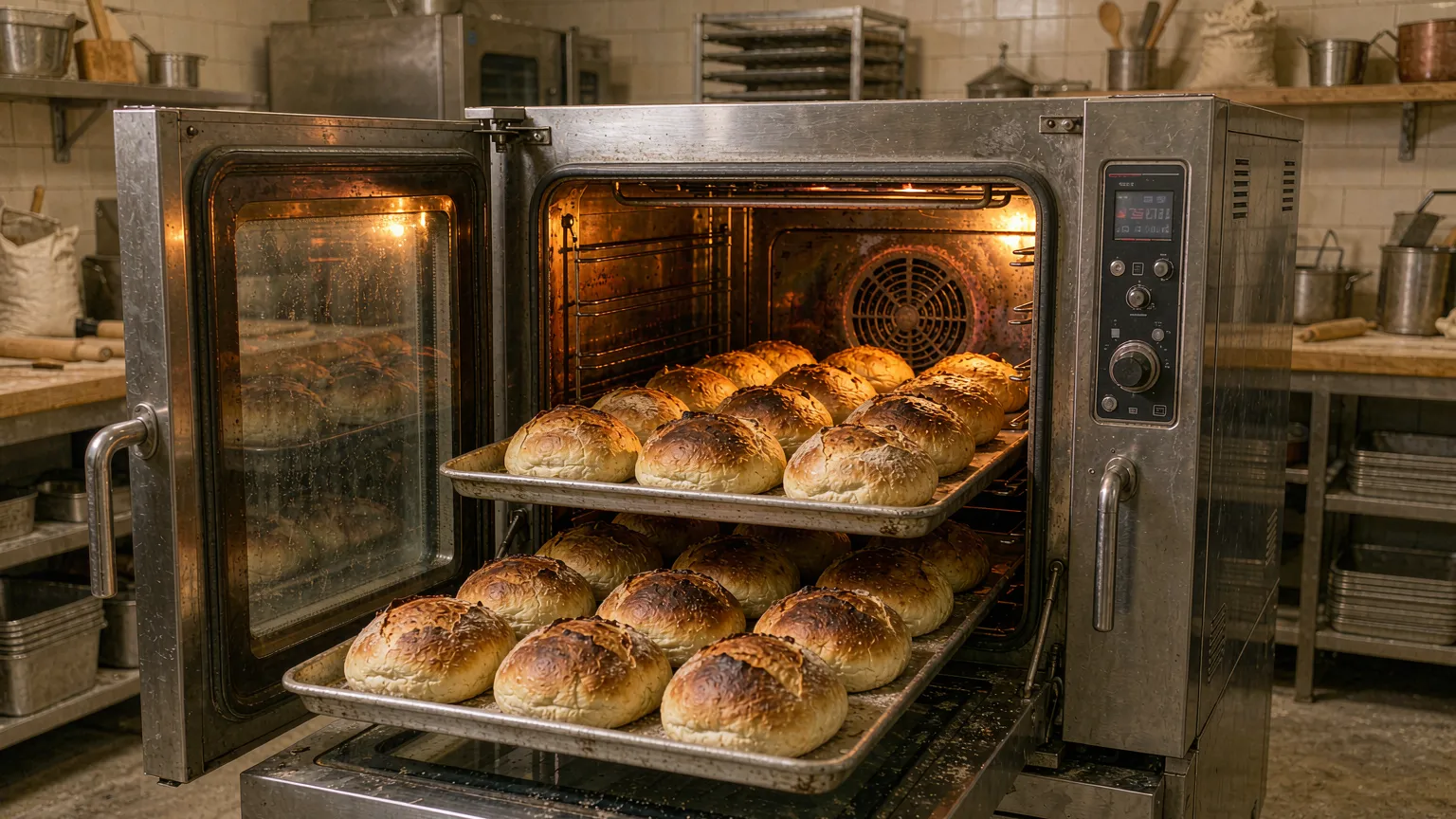
A step-by-step troubleshooting process for inconsistent baking in large ovens: interpreting browning, testing door seals, recording hearth temperatures, verifying air circulation, adjusting loading, and understanding the limitations of the oven type itself.
Par-Baked and Frozen Dough Production: Equipment That Makes It Work
2026/11/18
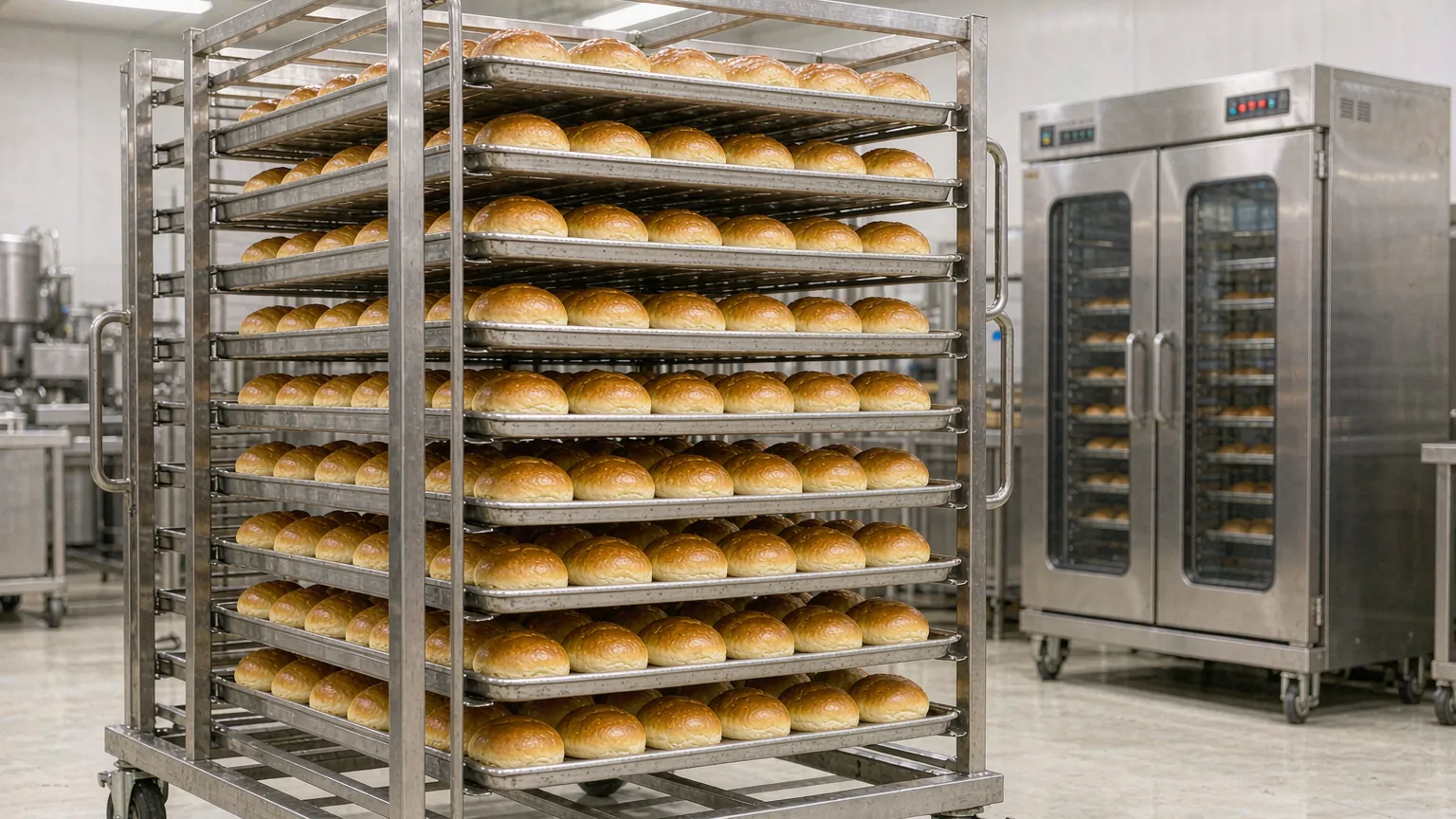
a structured walkthrough of commercial par-baked and frozen dough production as specified by proofing accuracy, cold mixing for frozen dough, plant rack ovens versus store bake-off ovens, freezing and transfer losses, and the trolley standard that holds the line together.
How to Choose a Bakery Equipment Manufacturer: A Buyer's Checklist
2026/11/18
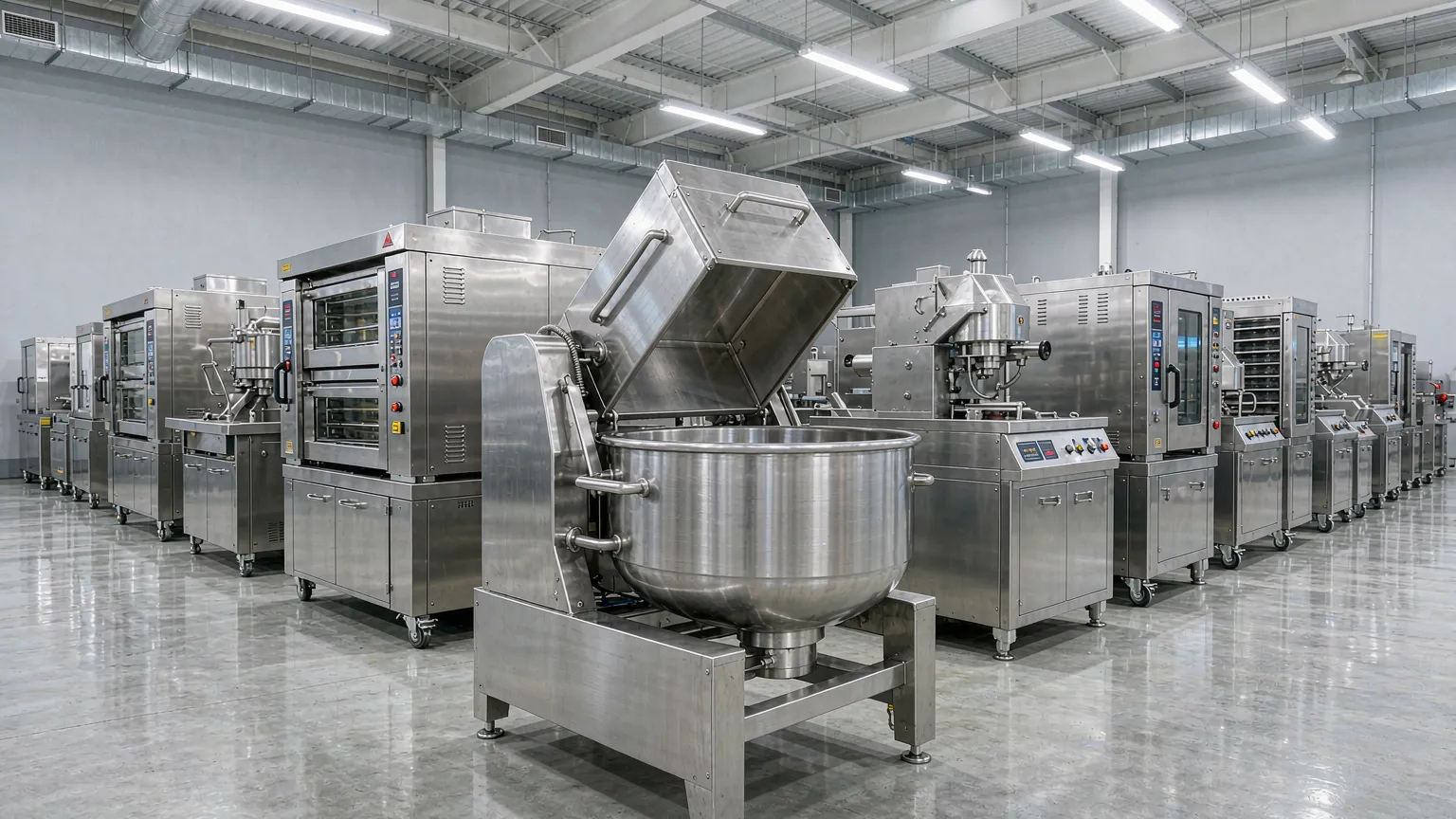
A buyer's checklist for choosing a bakery equipment manufacturer: what the factory builds, drawings and specifications, market standards, serviceability, trial bakes, commercial terms and the red flags worth walking away from.
Gas vs Electric Commercial Bakery Oven: How to Choose the Right Fuel
2026/11/18
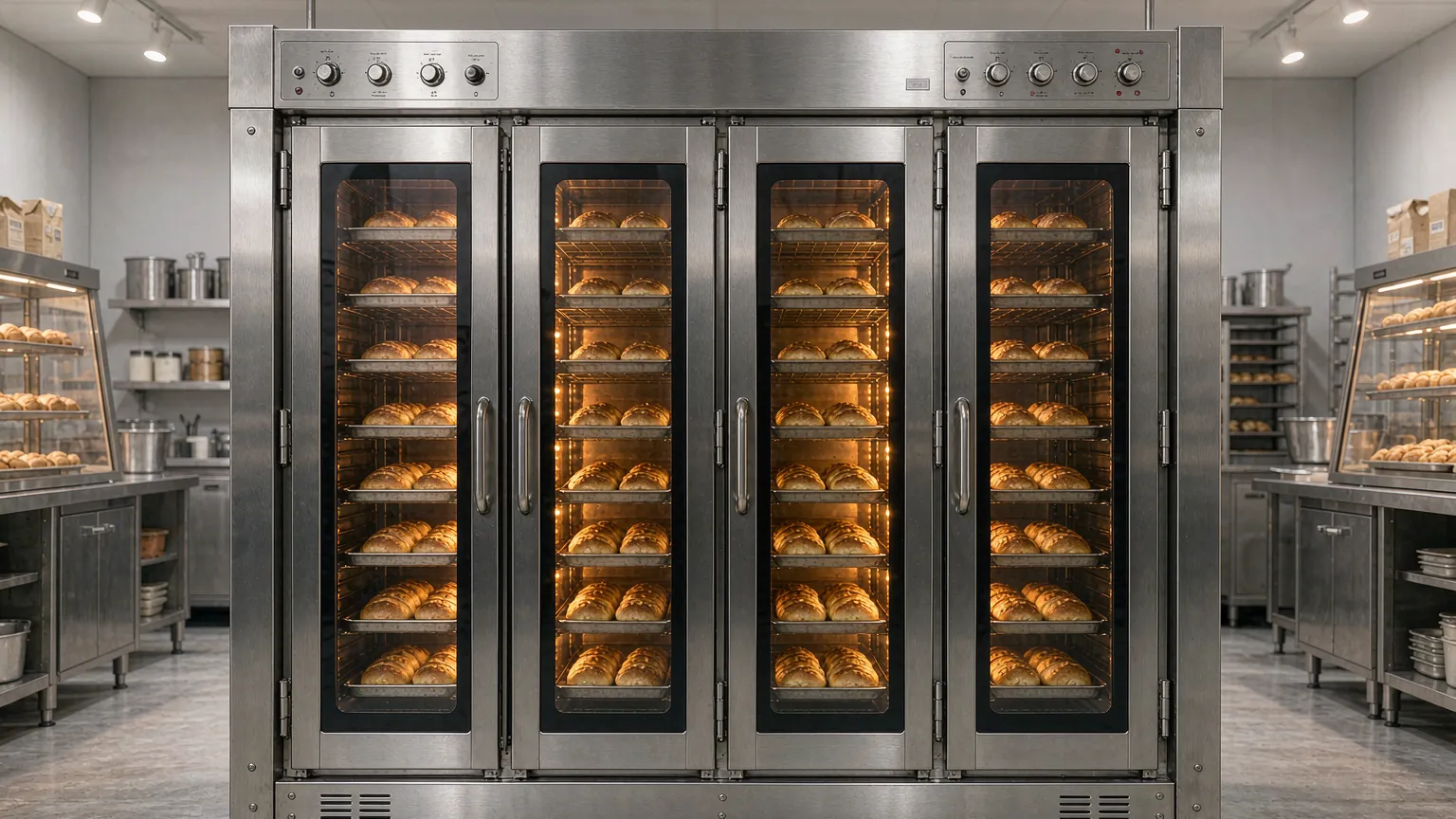
A practical comparison of gas and electric commercial bakery ovens: how each heats and recovers, how to compare running cost on local tariffs, the site requirements that usually decide the question, and how to match fuel to oven type.
Bakery equipment maintenance plan: mixer, proofer, and oven
2026/11/17
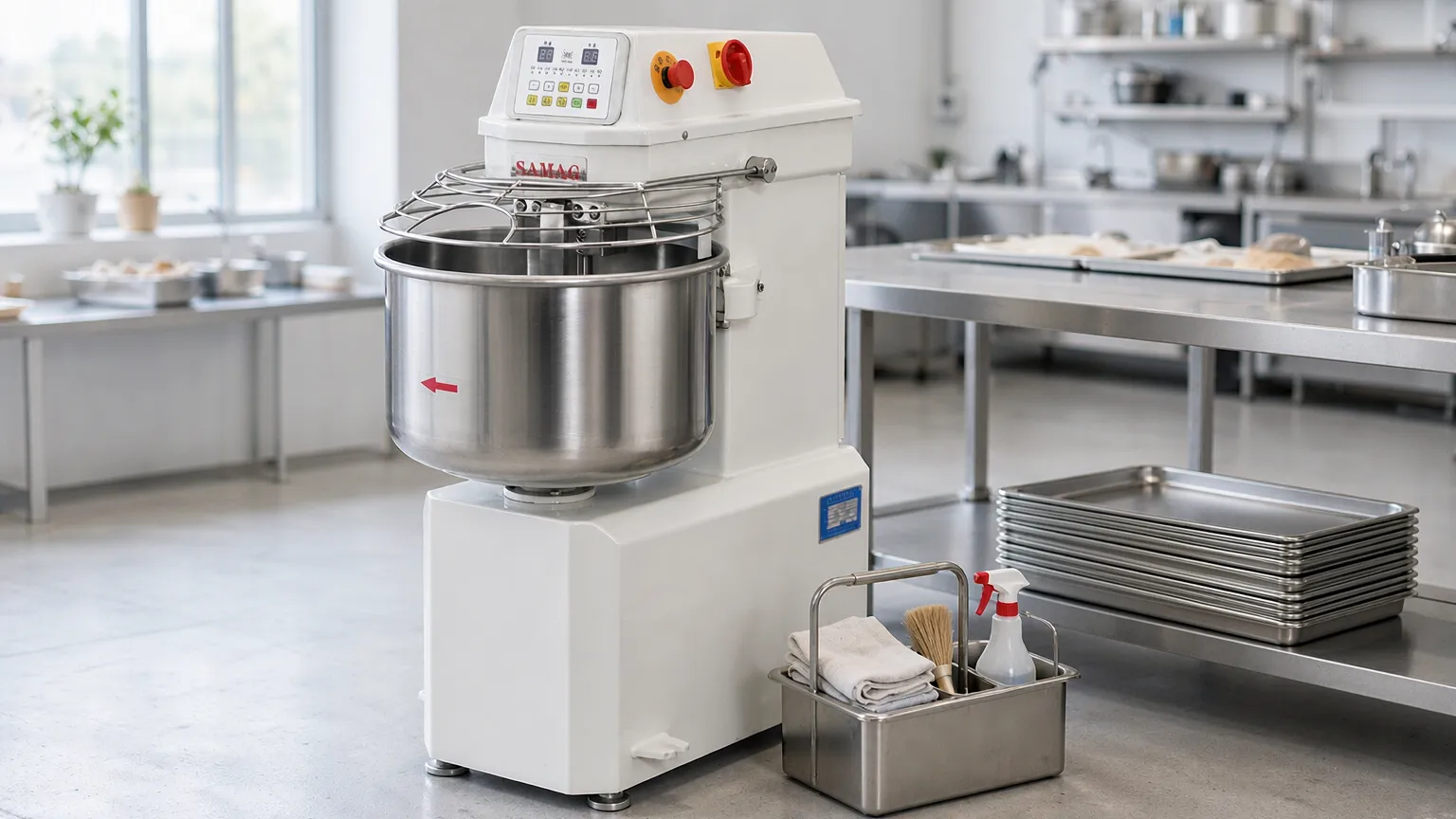
A practical maintenance schedule for bakery equipment: what needs cleaning every shift, what should be inspected weekly and monthly, the common wear points on mixers, proofers and ovens, and which spare parts are worth having on hand.
How to Simultaneously Bake Bread, Viennoiserie and Pizza in a Multi-Deck Oven (Performance)
2026/11/17
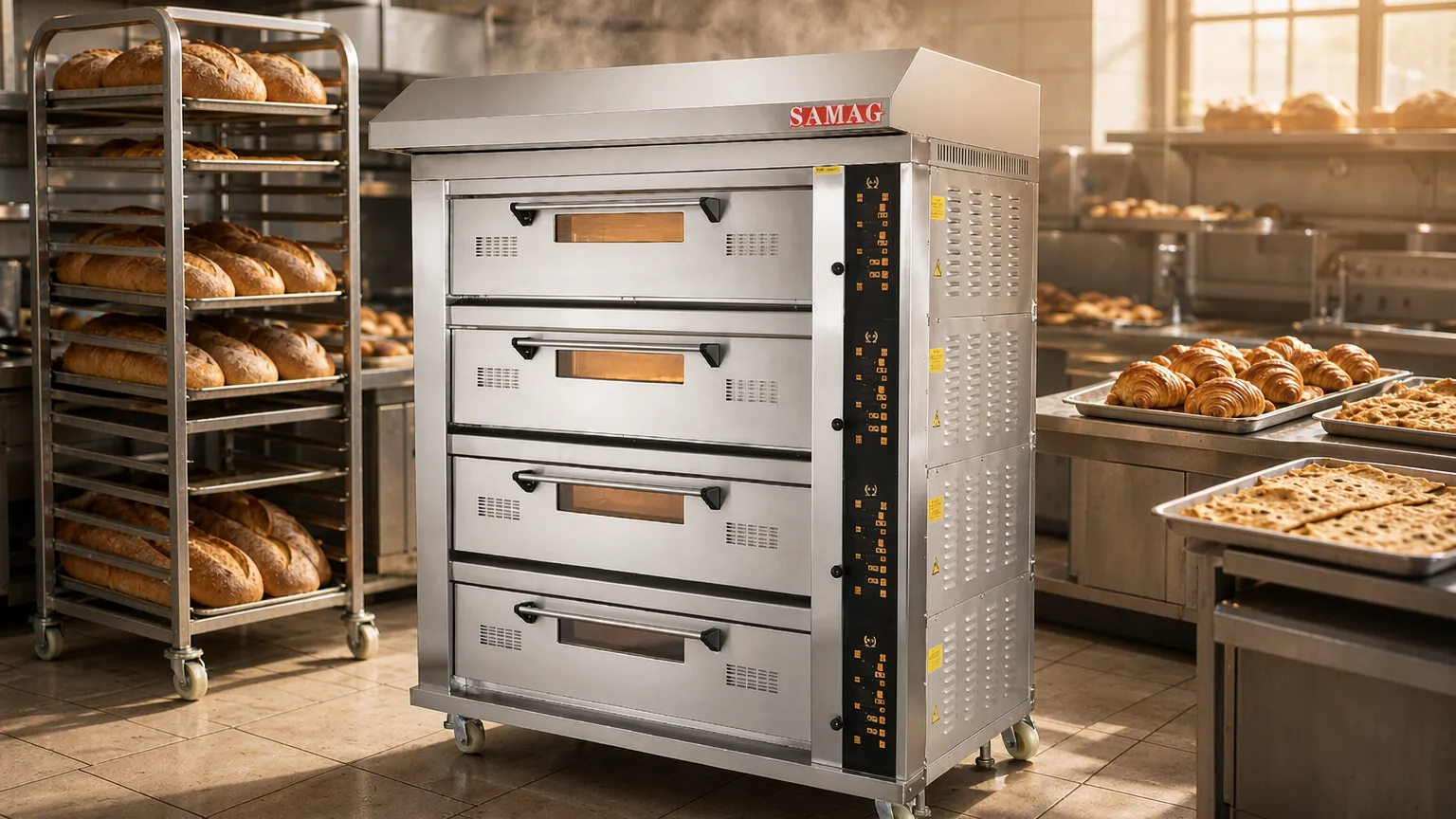
How to run a multi-deck oven across a mixed menu: top and bottom heat, one profile per chamber, glass doors, base rack ergonomics, and when extra decks stop paying for themselves.
Steam in Bread Baking: What It Does and How Ovens Deliver It
2026/11/17
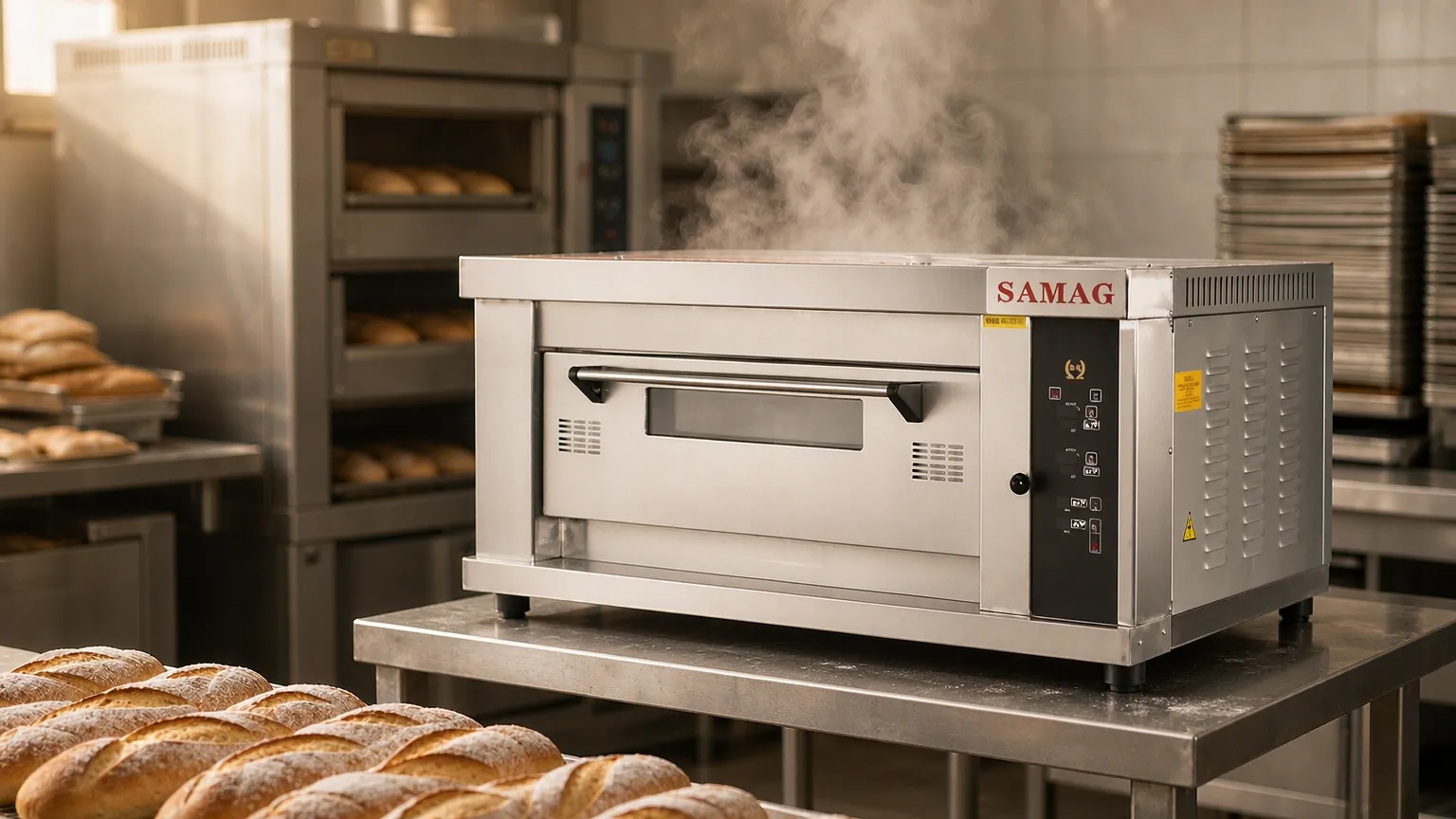
<p>What steam actually does in a bread bake, when to apply it, how deck, rack and convection ovens deliver it differently, and how to spot over-steaming before it reaches the shelf.</p>
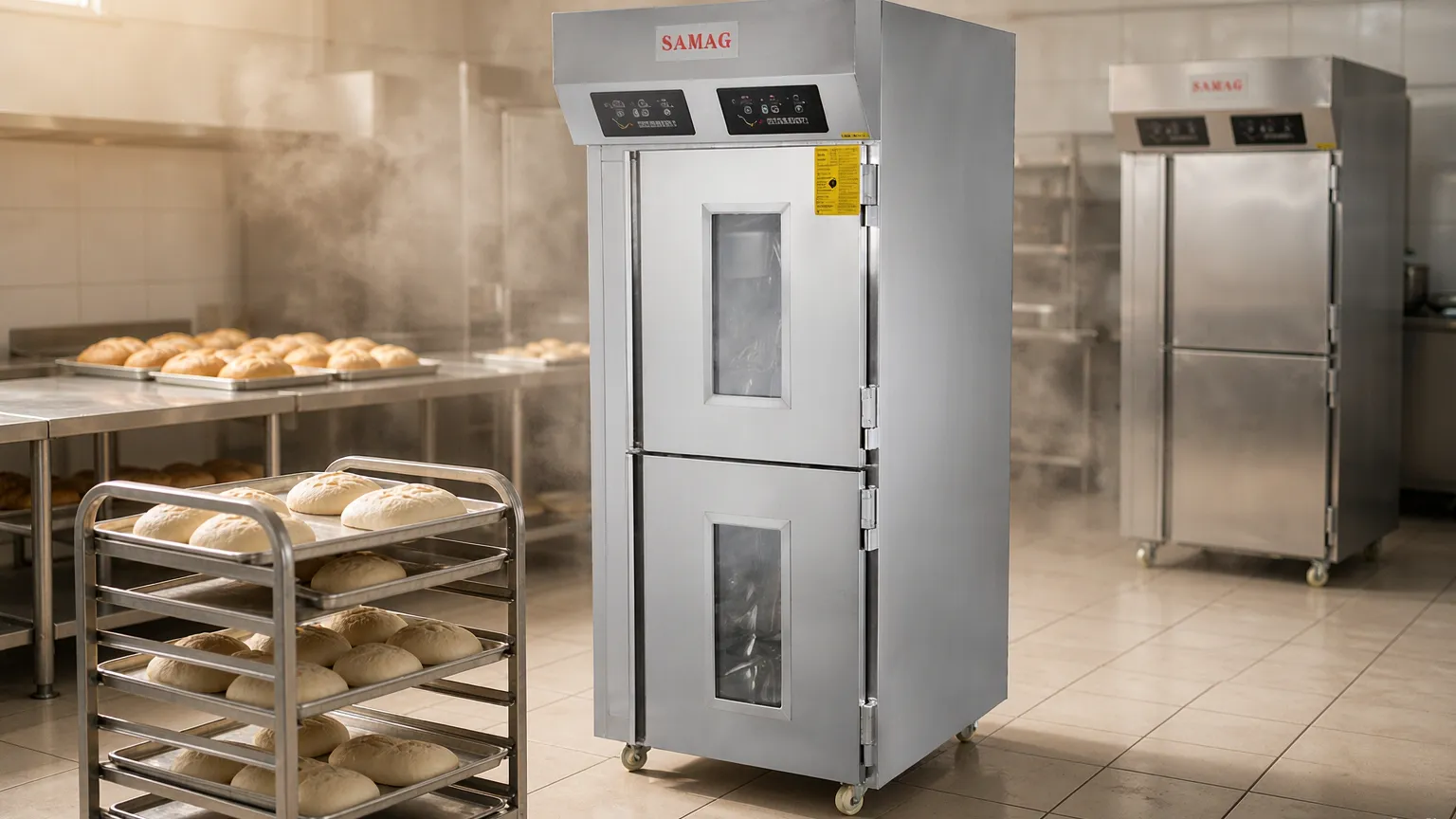
Bread Proofer Guide: Temperature, Humidity, and Tray Capacity
2026/11/13
Bread Proofer Guide: Temperature, Humidity & Tray Calculation Explained
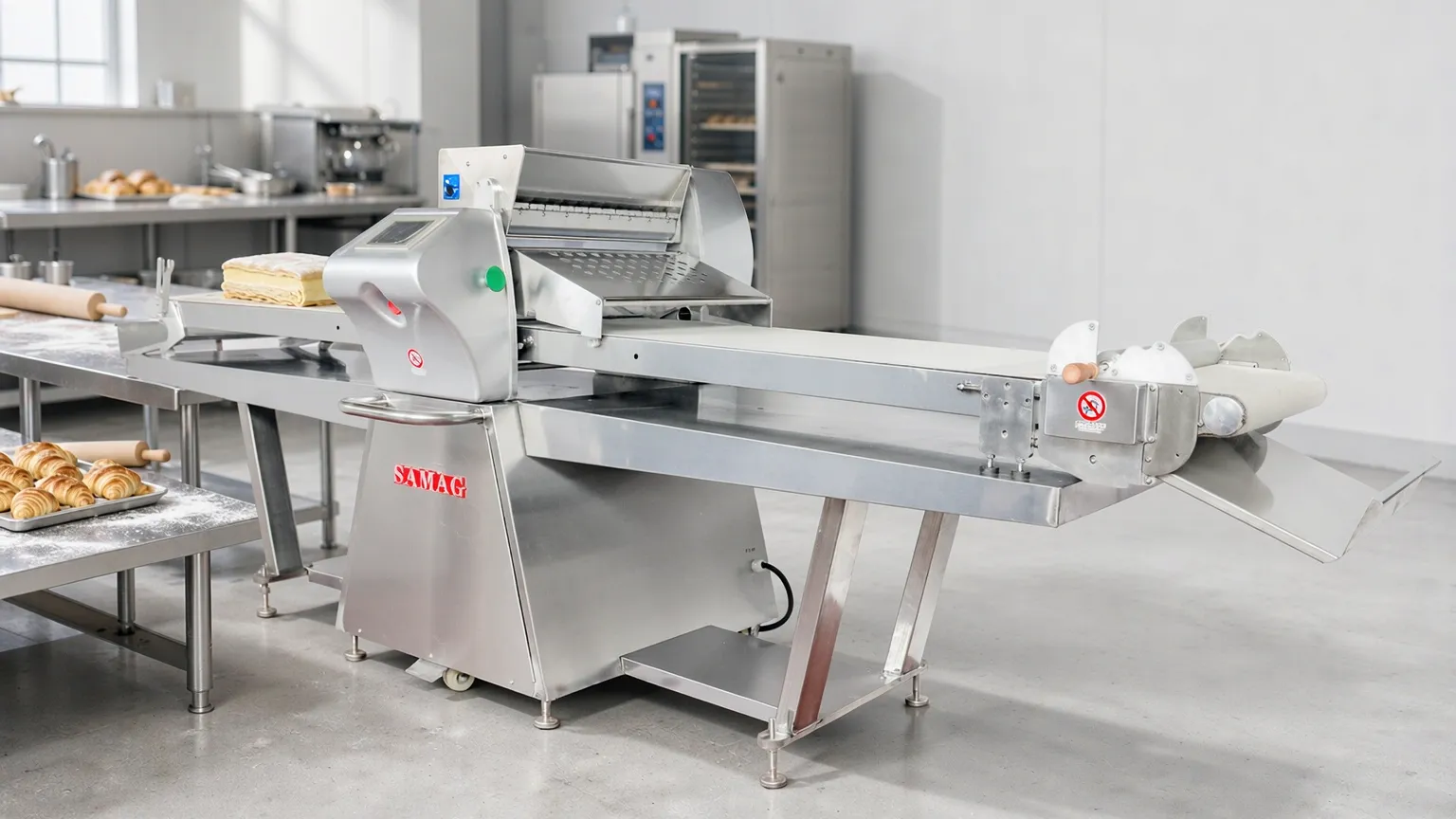
Commercial Dough Sheeter Buying Guide: Roller Gap, Belts and Throughput
2026/11/13
How to choose a commercial dough sheeter for croissants and puff pastry: roller gap control, reversible belts, tabletop versus floor-standing formats, and the pass-by-pass arithmetic behind real throughput.
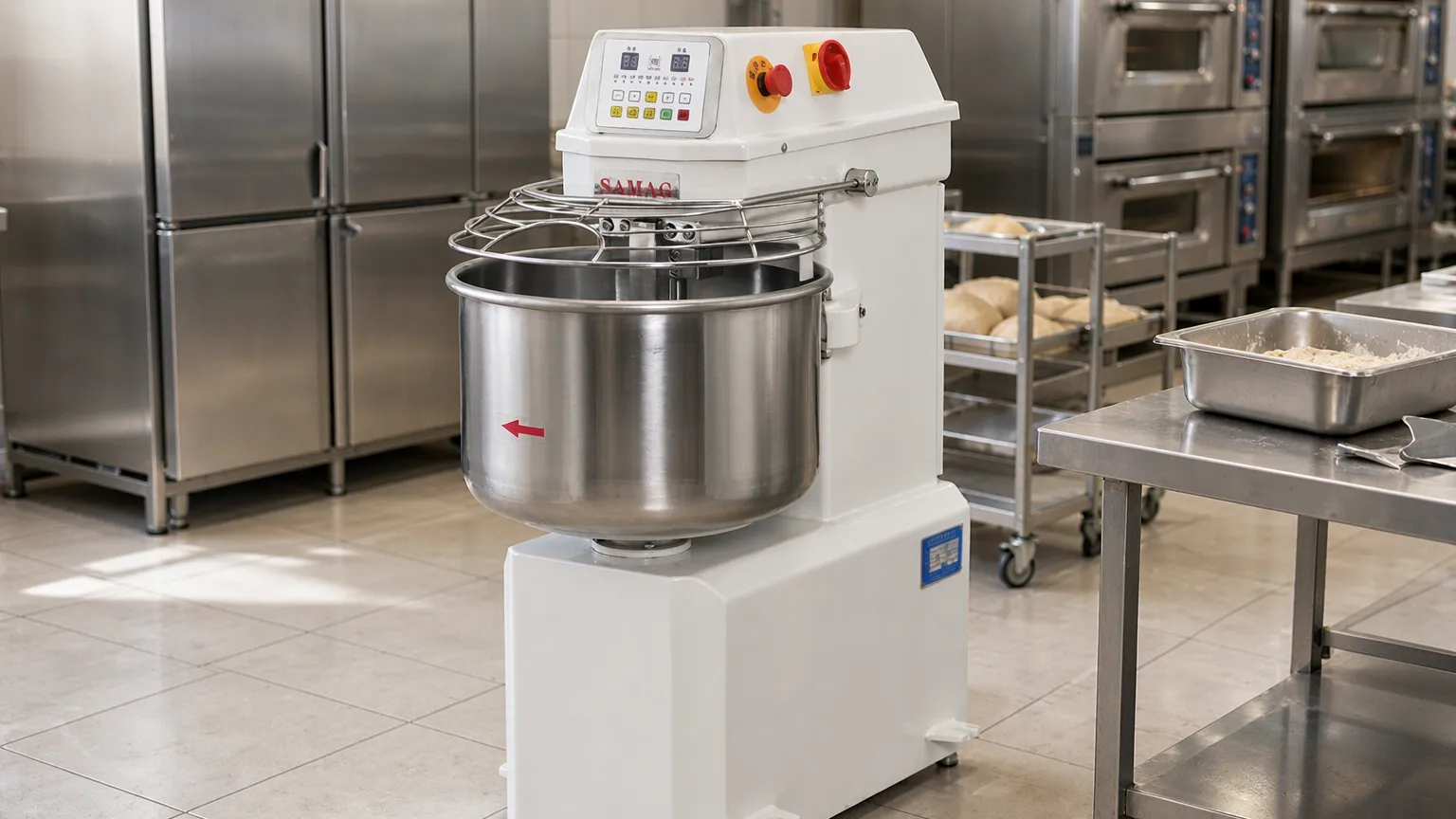
Commercial Spiral Dough Mixer Buying Guide: Bowl Size, Speed and Batch Logic
2026/11/13
How to size a commercial spiral dough mixer: batch weight versus bowl capacity, fixed versus removable bowls, speed and timer control, dough temperature, and the details that decide reliability after the first year.
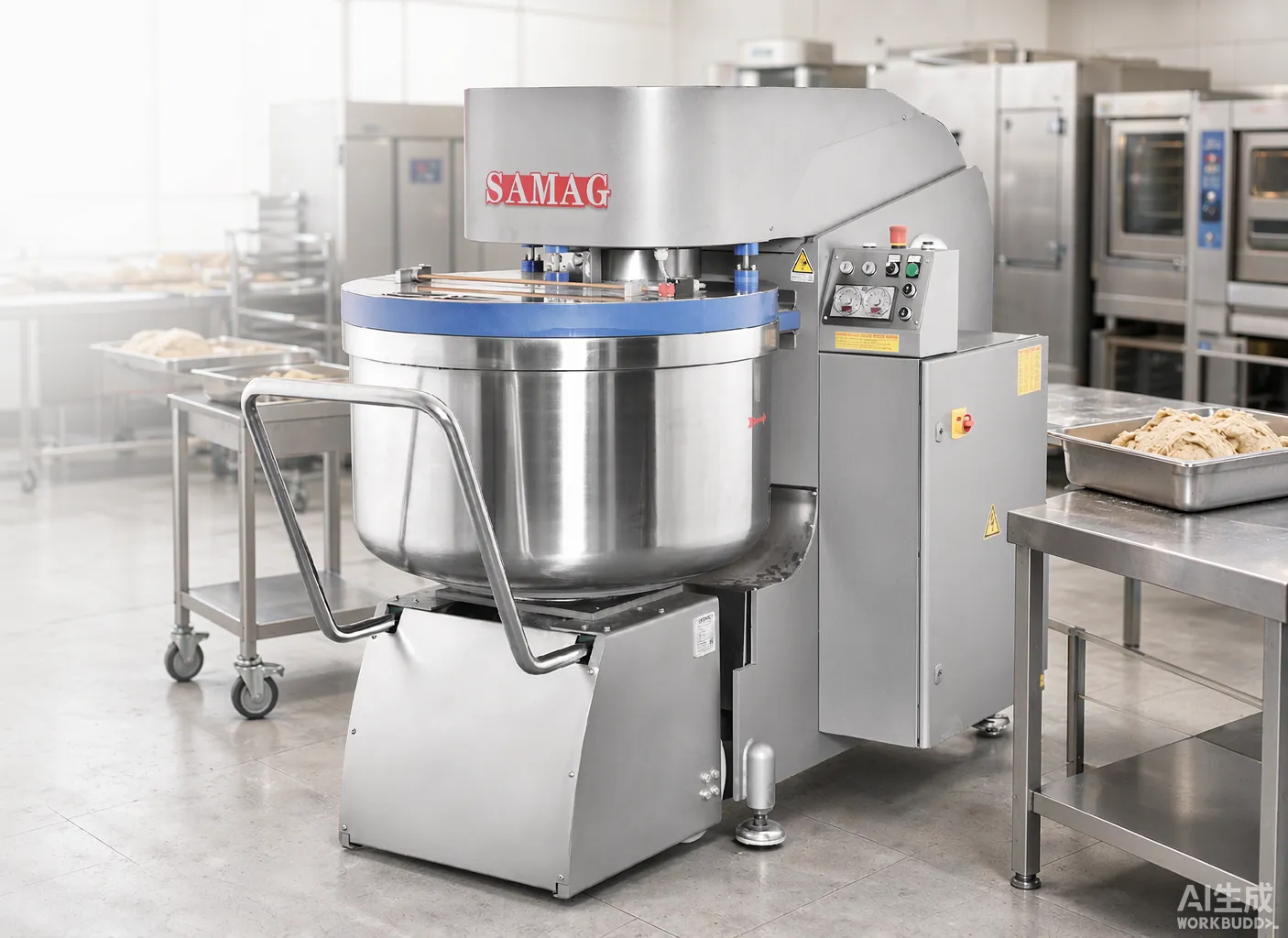
Bakery Production Line Planning: Matching Mixer, Proofer and Oven Capacity
2026/11/13
A step-by-step approach to planning a bakery production line: set a realistic output target, size mixing, sheeting, proofing and baking, and identify bottlenecks before ordering equipment.


